
Why "General Exercise" Isn't Enough for Your Back: The Clinical Pilates Difference
Vanessa Lo- Senior Physiotherapist and DMA Clinical Pilates Instructor @ Uplift Physio
The Key Difference - Pilates vs Clinical Pilates
If you’ve struggled with long-term back pain, you’ve likely been told to "just get stronger" or "do some Pilates." But if you’ve tried a big gym class and ended up feeling worse, there’s a scientific reason why.
Generic Pilates is a fitness tool. DMA Clinical Pilates is a medical tool.
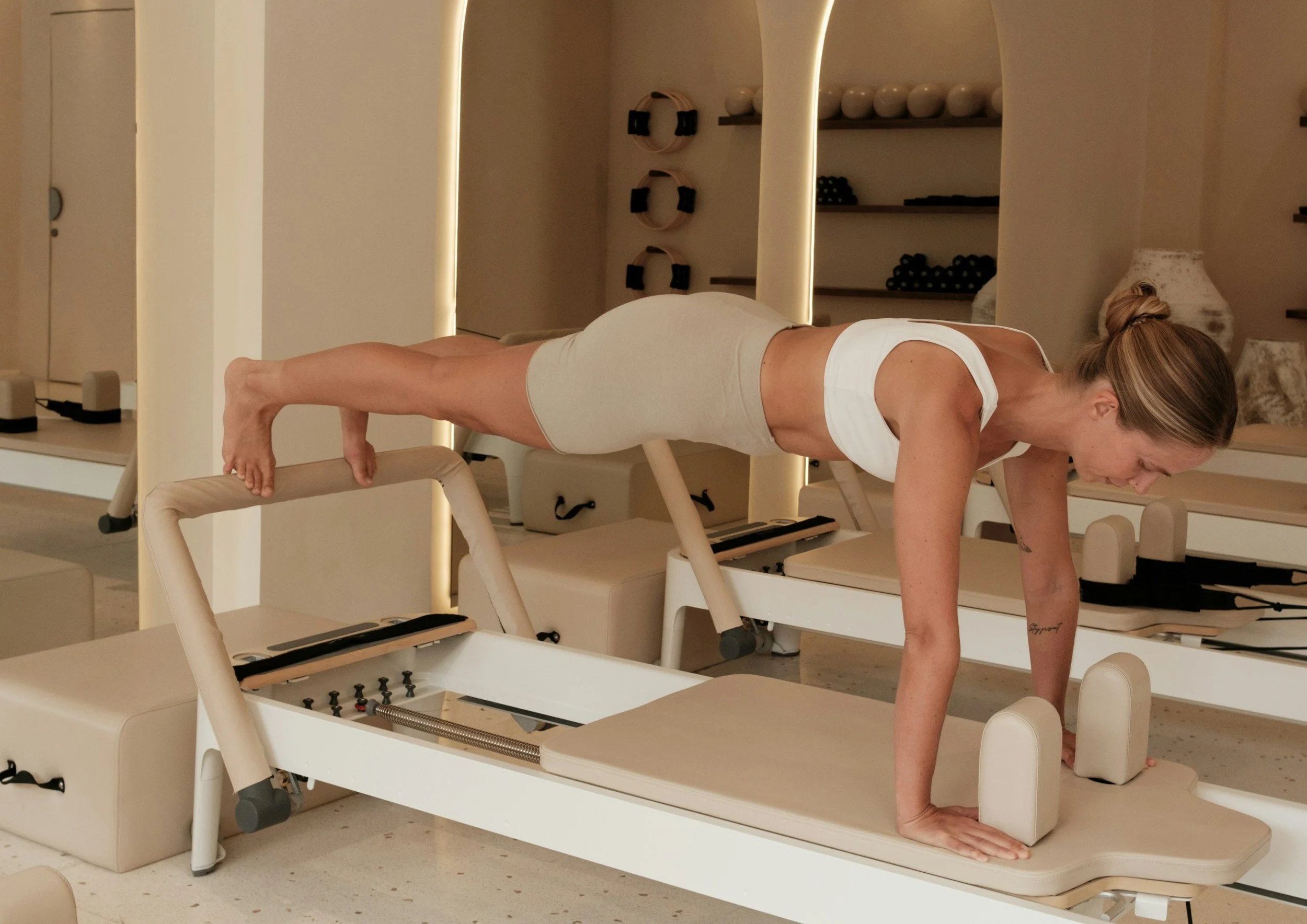
As a Physiotherapist, I use the DMA framework to move beyond general stretching. We use specific research to find the exact "movement key" that unlocks your recovery.
What the Latest Science Tells Us
We don't just guess what exercises you need; we follow the latest clinical evidence (including major studies from 2025). Here is why this approach works where others fail:
1. Significant Pain Relief (That Actually Matters)
Research comparing DMA Clinical Pilates to standard gym exercises shows a dramatic difference in results. In clinical terms, patients in DMA programs report a "clinically meaningful" reduction in pain. What does that mean for you? It means the difference between just "getting through the day" and actually being able to sit, stand, and play with your kids without that constant background ache.
2. Finding Your "Directional Preference"
Everyone’s back is different. Some people feel better when they bend forward; others feel better when they arch back.
The Assessment: We use a validated "Directional-Bias" test to find your body's "happy place."
The Result: We stop doing the movements that aggravate your nerves and focus 100% on the movements that heal them. This "targeted" approach is proven to be more reliable and faster than general core workouts.
So, When Will You See Results?
One of the most common questions I get is: "How long will it take until I feel better?" While everyone's journey is unique, the latest research on musculoskeletal conditions identifies a specific "sweet spot" for recovery. It isn't about how hard you push, but about neuromuscular change—literally teaching your brain and muscles to communicate effectively again.
To see lasting results, the evidence suggests a 6 to 8-week commitment:
Frequency: 2 to 3 sessions per week.
Session Length: 50 to 60 minutes.
This timeframe allows your nervous system to "rewire" and stabilise your spine without overtaxing your body or your busy schedule.
Retraining Your Brain, Not Just Your Muscles
Chronic pain changes how your brain communicates with your body. Over time, your brain "forgets" how to use the deep muscles that protect your spine. This is often called "Body Smudging."
Awareness over Effort: DMA Pilates isn't about "feeling the burn." We use low-intensity, pain-free movements (RPE 1–3) to retrain your nervous system.
Better Balance: Studies show that Clinical Pilates significantly improves "postural sway." This means your body becomes better at stabilizing itself automatically during daily tasks, like walking on uneven ground or reaching for a cupboard.
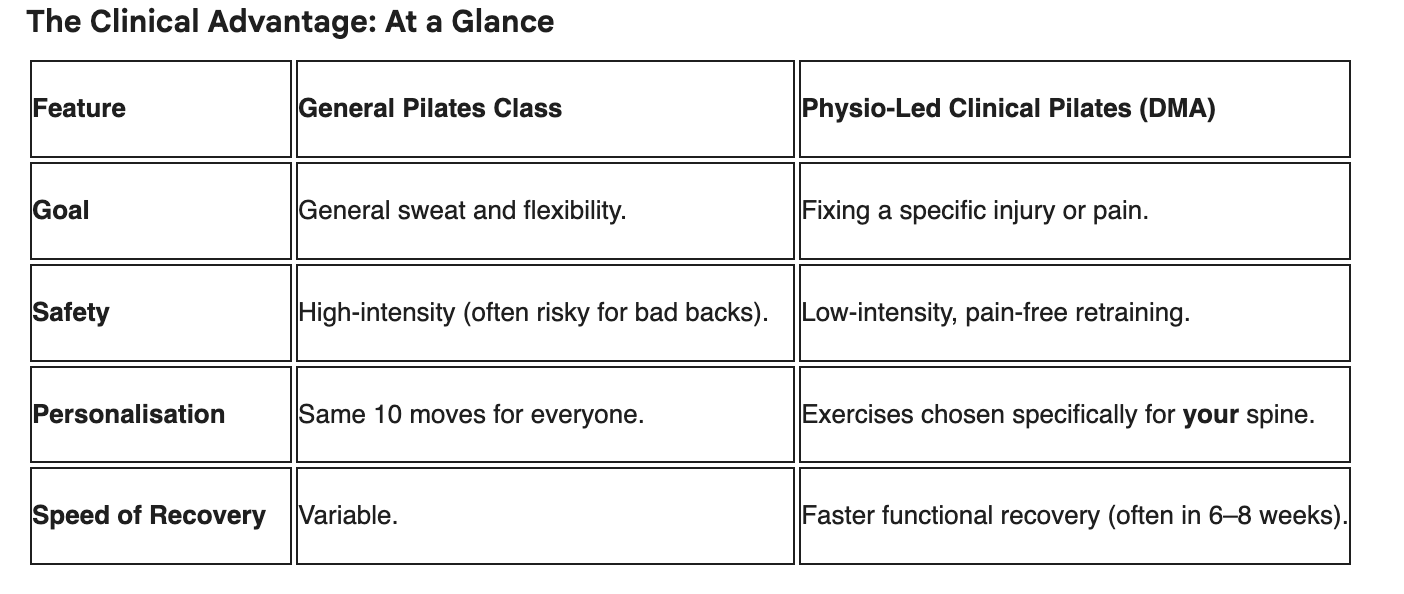
The Clinical Advantage: At a Glance
Is it Time for a Smarter Approach?
The "no pain, no gain" mentality doesn't work for chronic back issues. In fact, the science shows that gentle, precise, and individualised movement is the fastest way back to full health.
By focusing on your body’s unique "directional bias" and using the Reformer to safely "unload" your joints, we can stop the cycle of flare-ups.
Ready to move with precision? Let’s move away from "general exercise" and start your evidence-based recovery journey with Uplift Physio® today.
